Working in Lynnwood's buildings and neighborhoods
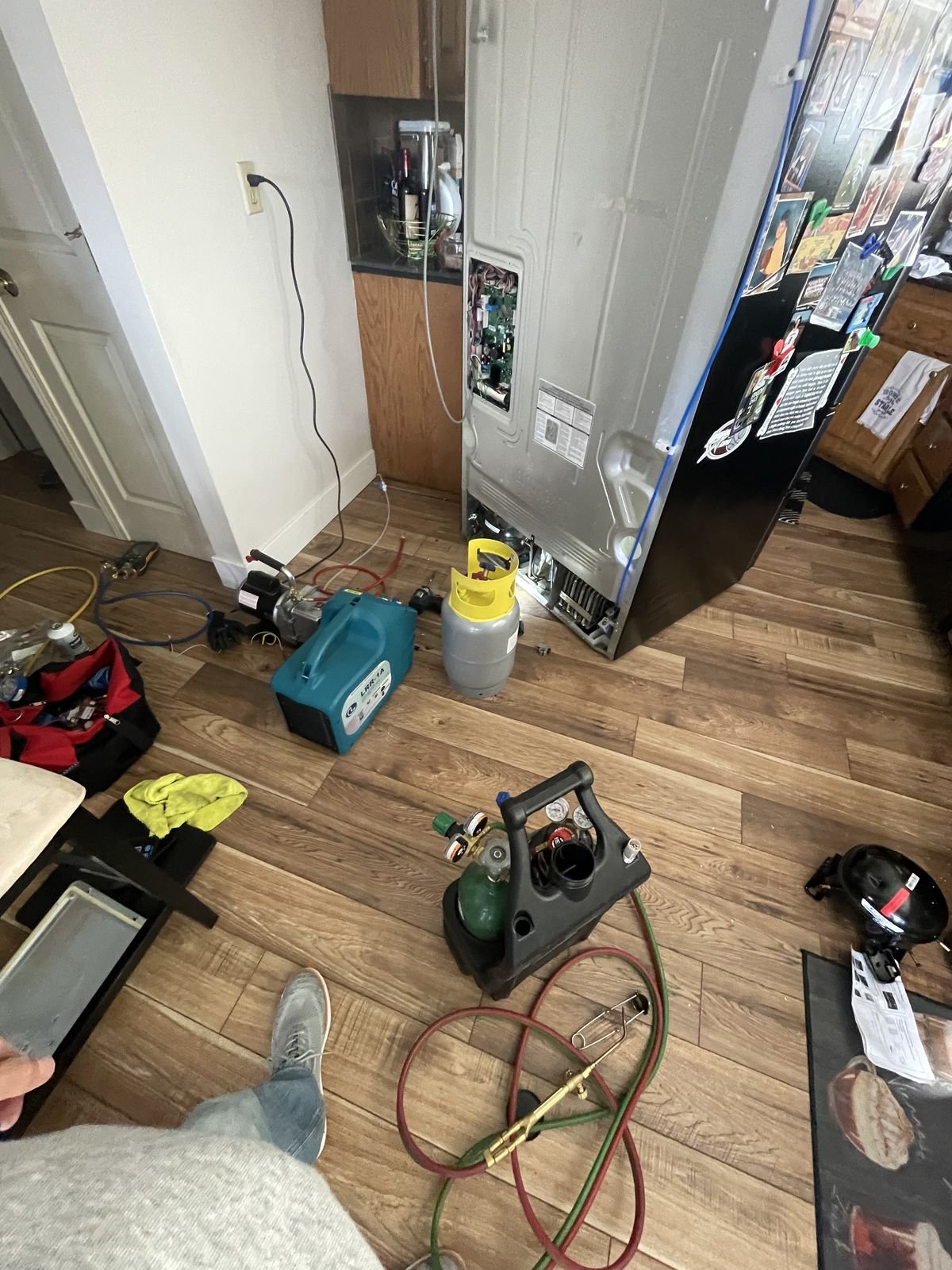
Many complexes around the City Center and along SR 99 date from the 1970s and 1980s, when Lynnwood grew faster than almost anywhere around it, and their kitchens tend to hold mid-range top-freezer or side-by-side models replaced on a rolling basis. Defrost failures are the most common call we get from those units: the freezer slowly ices over, cold air stops reaching the fresh-food side, and the tenant turns the dial colder, which only speeds things up. A full defrost diagnosis, rather than just melting the ice with a hair dryer, is what keeps the problem from coming back in three weeks.
The newer side of town looks different. Close to half the homes in Martha Lake and north Lynnwood were built after 2000, so the fridges there are French-door and bottom-freezer models with electronic controls, multiple sensors and, increasingly, variable-speed compressors. Diagnosis on those starts with the service menu and error history rather than a screwdriver. If you are in Alderwood Manor, once a district of small poultry farms, your address may say Bothell or Brier, but it sits squarely in our usual Lynnwood loop.
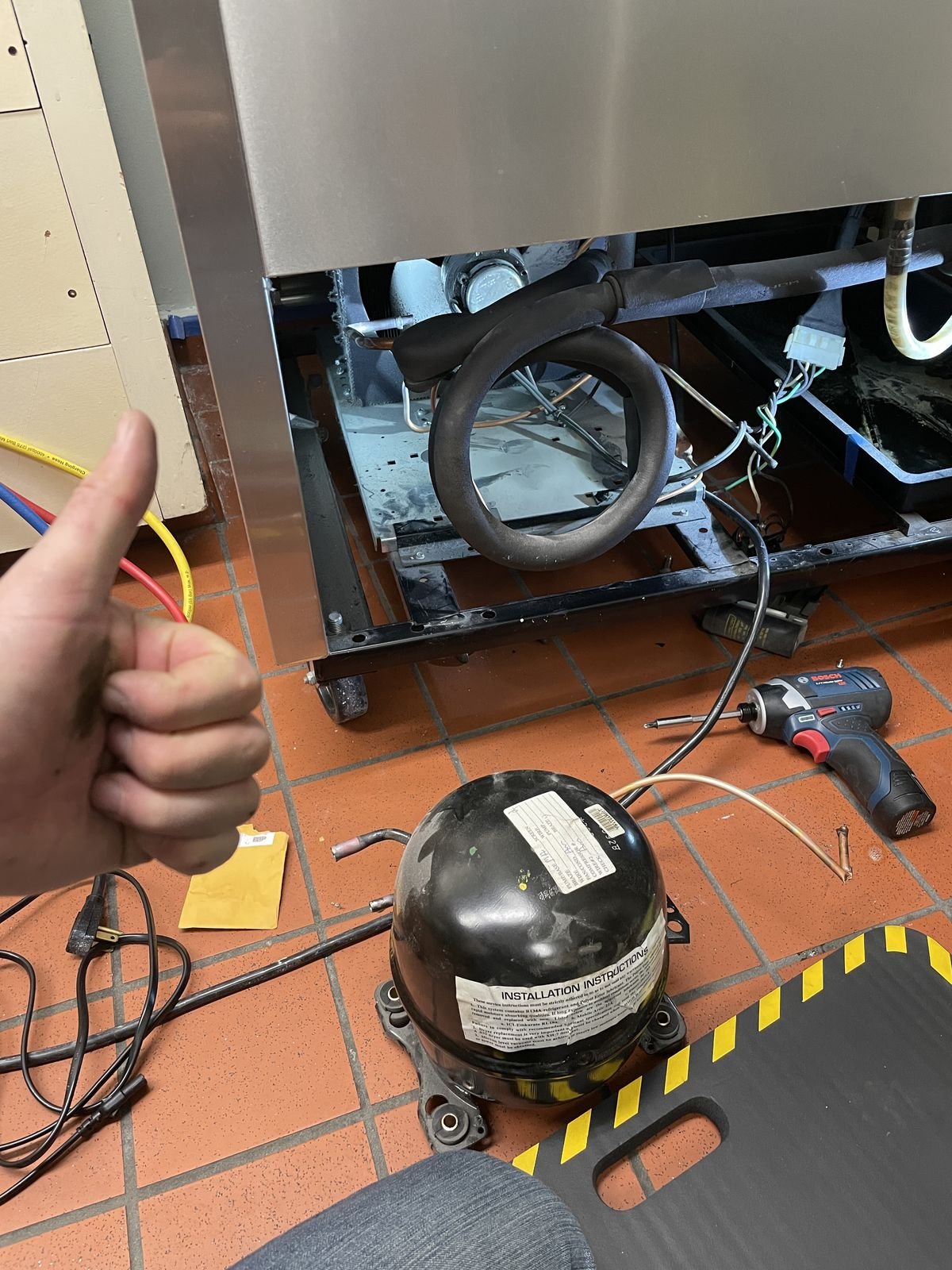
Lynnwood water comes from Everett's Spada Lake supply through the Alderwood district, and the city's 2025 report puts average hardness near 12.5 parts per million. That softness keeps mineral scale out of inlet valves and ice makers. A failed valve here is usually worn out, not crusted shut. What does build up in Lynnwood kitchens is lint and dust. Apartments with carpet, pets and a fridge pushed flush against the wall send all of it toward the condenser coil, and a blanketed coil makes every other part work harder. We clean it on every cooling call as a matter of routine, and we show tenants where the grille comes off so the next layer does not sit there for five years. A clean coil will not rescue a dead fan, but it does take strain off the compressor during the next heat wave.